LEGAL ENTITY IDENTIFIER (LEI) IN INDIA
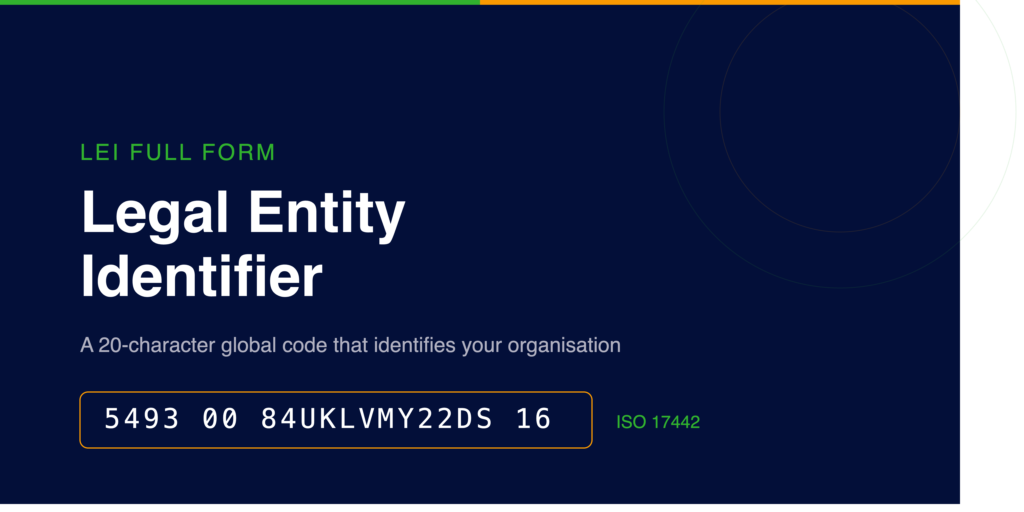
The full form of LEI is Legal Entity Identifier.
It’s a 20-character code that identifies a legal entity, a company, fund, trust or other organisation, in financial transactions anywhere in the world. Every LEI is unique to one entity, and the code is based on the international standard ISO 17442.
Banks, brokers and regulators use the LEI to identify exactly who is behind a transaction. In India, the Reserve Bank of India requires an LEI for various borrowers and for large-value transactions, which is where many people first see the term and search for the full form of LEI in banking.
What LEI stands for, in plain terms
LEI stands for Legal Entity Identifier. Break the three words down and the meaning is in the name. “Legal entity” is the company or organisation. “Identifier” is the unique code that points to it. Put together, the LEI is a single global reference for one specific organisation, recognised in every country that uses the Global LEI System.
What the 20 characters mean
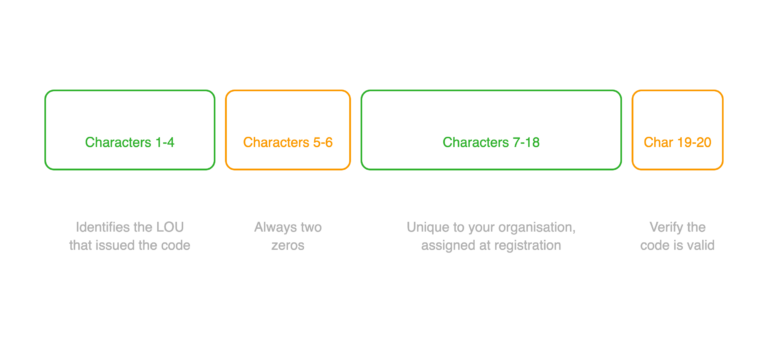
An LEI isn’t a random string. The full form of the code breaks down like this:
Characters 1 to 4 identify the LOU, the organisation that issued the LEI. Characters 5 and 6 are always zero. Characters 7 to 18 are unique to your entity. The final two are check digits that confirm the code is valid.
You don’t need to memorise this. The structure is fixed worldwide, so any system that reads an LEI can validate it instantly.
What an LEI record contains
The code points to a public record on the Global LEI Index. That record holds your entity’s official name, registered address, country, company registration number where applicable, and the entity’s status and renewal date. Anyone can look it up for free. That public transparency is the whole point of the LEI.
What you need to apply for an LEI
Applying is straightforward. For most companies you need the legal name exactly as registered, the registered address, the company registration number from the relevant registry, and confirmation of who is authorised to request the LEI. For funds and trusts there are a few extra details about the structure.
With LEI Worldwide, your entity is verified against the official company registry by API, so most LEIs are issued instantly. You don’t fill in a long form by hand. We pull and confirm the registry data for you.
How long an LEI lasts
An LEI is valid for one year and then needs renewing to stay active. You can register for up to five years at once, which lowers the yearly cost and means you don’t renew every year.
Now you know what LEI stands for and what the code is made of. If you need one, we’re a GLEIF-accredited Registration Agent, registering LEIs since 2017.